Quick Answer: Best Minecraft Floor Pattern and Design Method
The safest Minecraft floor pattern starts with one main floor block, one border block and one small accent. For a starter house, that might be spruce planks across most of the room, stripped oak or barrels along the edge, and a few stone bricks or lanterns near work areas. For a castle hall, stone bricks can carry the room while polished andesite, tuff or deepslate marks the border and corners. This simple structure also works as a repeatable floor design for larger rooms.
A floor should support movement first. Players need to read where the room opens, where the doorway sits and where a table, bed, furnace, altar or storage wall belongs. If every block is scattered evenly, the floor becomes visual noise and the room feels smaller than it is.
Use a simple ratio for most rooms: about 70 percent main floor, 20 percent border or transition and 10 percent accent. Wider halls, throne rooms and bases can use more complex patterns, but the center line should still stay readable.
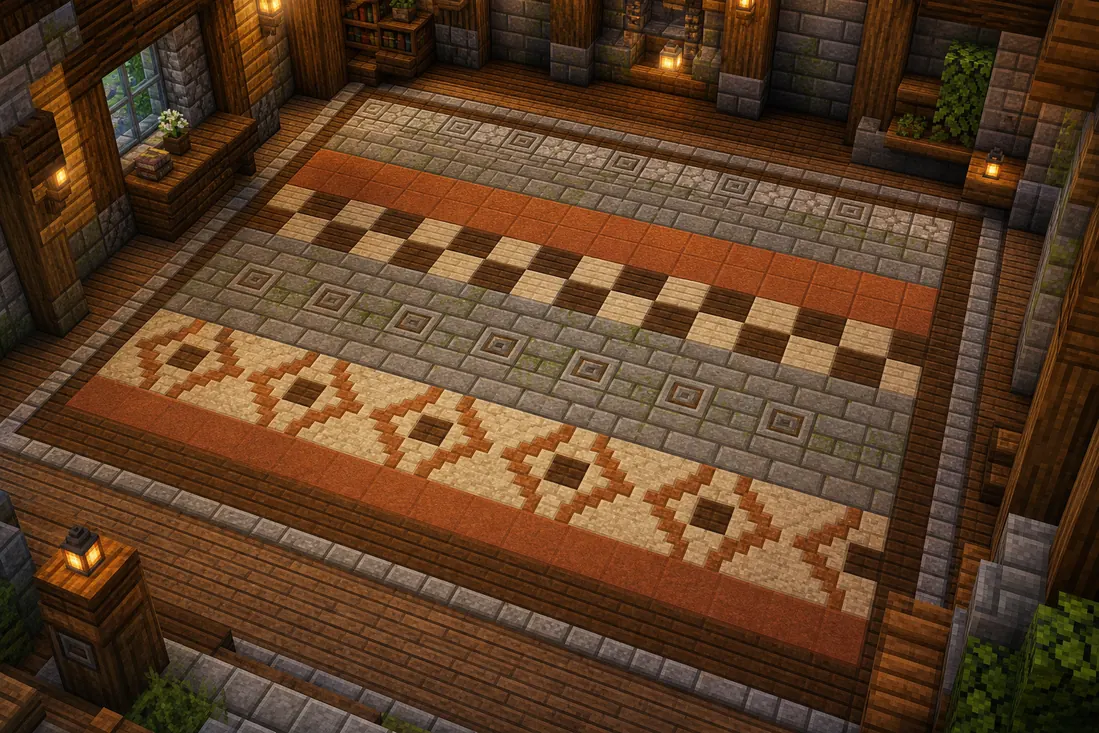
Fast Minecraft Floor Design Recipe
- Choose the room purpose before choosing blocks; the use case controls the floor design.
- Use one main floor material for most of the walking area.
- Frame the room with a darker, lighter or more structured border.
- Place accents at corners, doorways, pillars, rugs, workstations or lighting points.
- Keep high-contrast checkerboards for small zones, not entire large bases.
- Test the pattern from normal player eye level before copying it across a big room.
Why Minecraft Floor Patterns Work
Floors cover a lot of visible space, especially in houses, halls, bases, shops and storage rooms. A flat floor can look clean, but a controlled pattern makes the room feel designed. The goal is not to use the most blocks; the goal is to guide the eye without fighting the walls, roof and furniture.
Good Minecraft floor designs use contrast at the right scale. Wood planks, stripped logs, barrels and trapdoors feel warm and handmade. Stone bricks, andesite, tuff and deepslate feel heavier and more formal. Terracotta, sandstone, copper and glazed blocks are stronger, so they usually work better as accents or borders than as the entire floor.
For block names and version checks, use the Minecraft Wiki block reference before building a material list for survival worlds.
Pattern direction matters. A hallway can use stripes or repeated ribs because players move through it. A square room usually needs a center field, border and corner details. A round tower or diagonal build needs smaller repeated modules so the floor does not fight the shape.
Think of the floor as the bridge between palette and layout. The palette tells you which blocks belong together; the layout tells you where each block should sit. That is why floor patterns are a distinct opportunity from wall gradients, roof gradients and path gradients.
If the colors feel close but the order is unclear, test nearby block families in the Minecraft Gradient Generator then bring the strongest sequence back into the floor layout.
12 Minecraft Floor Patterns and Palettes
Use these Minecraft floor ideas as starting patterns. Swap blocks for biome, room size, available materials and the amount of contrast your build can handle.
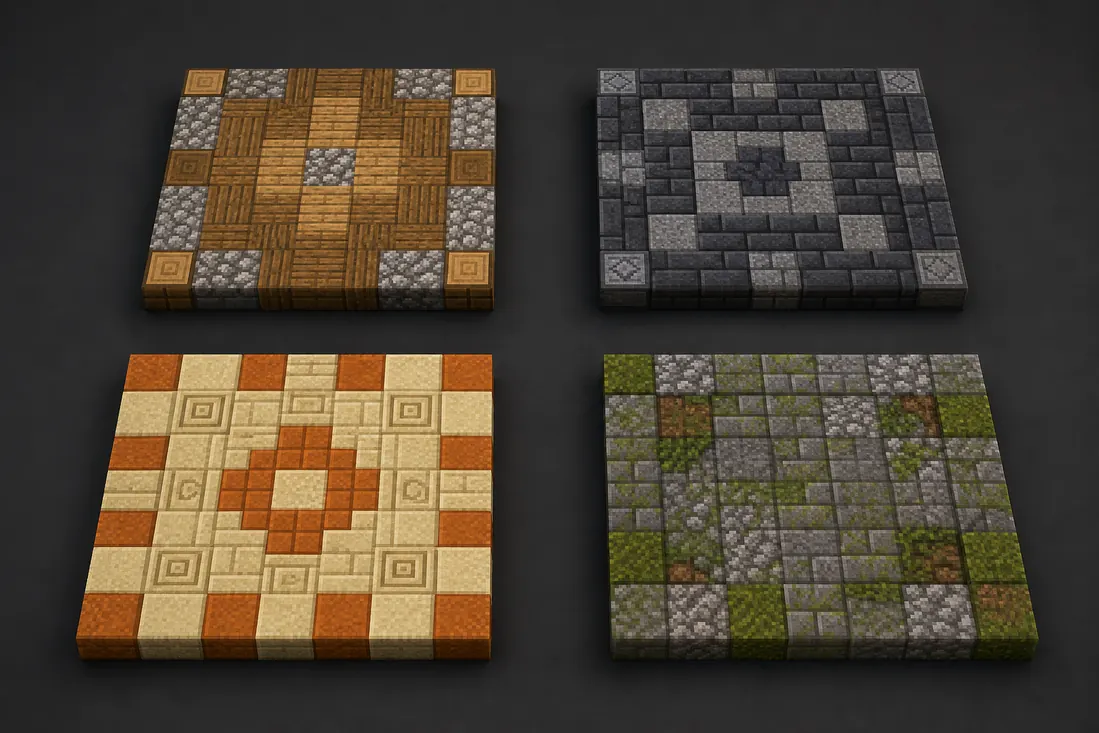
| Floor Style | Block Palette | Best Placement |
|---|---|---|
| Starter house floor | spruce planks -> oak planks -> stripped oak -> barrel | Use spruce or oak as the field, then place stripped logs or barrels near workstations and corners. |
| Cozy cabin floor | dark oak planks -> spruce planks -> stripped spruce -> moss carpet | Keep the main room wooden and let moss soften entrances, fireplaces or plant corners. |
| Castle hall floor | stone bricks -> polished andesite -> tuff bricks -> deepslate tiles | Stone bricks carry the center, while deepslate and tuff mark borders, pillars and darker corners. |
| Medieval kitchen floor | cobblestone -> andesite -> mud bricks -> packed mud | Use rougher blocks around furnaces, barrels and food prep areas. |
| Desert house floor | sandstone -> cut sandstone -> terracotta -> orange terracotta | Keep sandstone dominant and use terracotta as warm trim rather than full coverage. |
| Cave base floor | stone -> gravel -> tuff -> cobbled deepslate -> deepslate tiles | Brighten entrances with stone and darken deeper rooms with deepslate. |
| Nether base floor | blackstone -> polished blackstone -> basalt -> crimson planks -> shroomlight | Let blackstone carry the floor, then use crimson and shroomlight to mark paths and focal points. |
| Ocean room floor | prismarine -> dark prismarine -> warped planks -> sea lantern | Use sea lanterns sparingly in a grid or corner pockets so the floor does not glare. |
| Storage room grid | smooth stone -> stone bricks -> barrels -> dark oak trapdoors | Use a clean grid that lines up with chest rows, aisles and labels. |
| Library floor | spruce planks -> dark oak planks -> bookshelves -> red carpet | Wood carries the room, carpet defines reading zones and bookshelf blocks stay near walls. |
| Fantasy tower floor | calcite -> amethyst block -> polished deepslate -> tinted glass | Use bright magical blocks only near the center symbol, rim or portal zone. |
| Workshop floor | copper -> exposed copper -> mud bricks -> stone bricks -> iron trapdoor | Use copper near machines and workstations, with stone or mud brick as quieter support. |
Choose the Floor Pattern by Room Size
Small rooms need restraint. A five-by-five starter room cannot hold a complex border, checkerboard, rug and accent grid at the same time. Use one field block, one doorway accent and maybe one border line. If the floor has too many materials, furniture and walls will disappear visually.
Medium rooms can use a field, border and center feature. For example, a nine-by-nine hall can use spruce planks across the center, dark oak around the edge and a small stone or carpet detail under the table. This gives the room structure without making it feel like a tiled showroom.
Large halls and bases can use repeated modules. A storage hall may repeat a three-block grid that lines up with chest aisles. A throne room may use a central runner, symmetrical side fields and darker corners. The bigger the room, the more important it is that the pattern repeats logically.
How to Place Floor Blocks Without Random Noise
Start with the walking route. Connect doors, stairs, beds, storage walls, farms, portals and workstations before adding decorative variation. A beautiful floor that does not match the way players move through the room will feel awkward.
Use borders to hold the room together. Darker planks, stone bricks, polished andesite, deepslate tiles or carpet can frame the main field. Borders work especially well when they line up with walls, pillars, counters, stair edges or balcony rails.
Place accents where the player should look. Corners, door thresholds, fireplaces, crafting stations, enchanting setups, table legs, altars and lighting pockets can all handle stronger blocks. Avoid spreading bright accents evenly across the floor unless the room is intentionally magical or modern.
Break checkerboards carefully. A two-block checkerboard can look good in a small kitchen, tower or shop, but it becomes tiring across a large base. Use checker patterns as panels inside a border, or reduce contrast by choosing two blocks from the same material family.
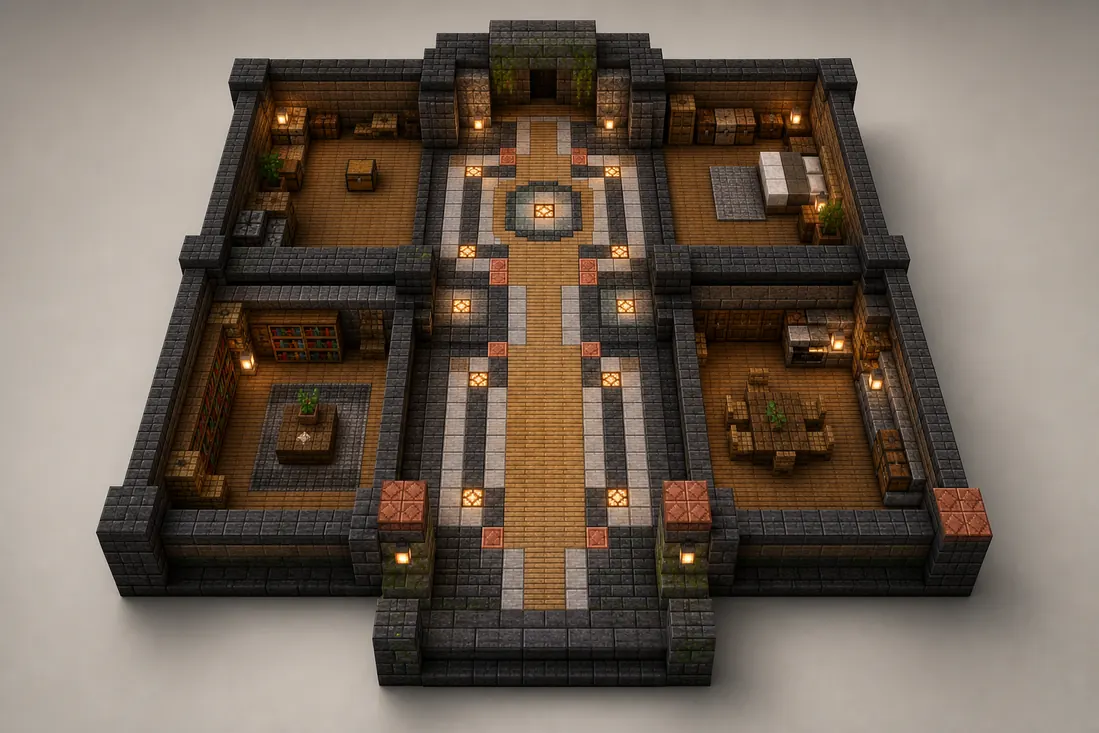
Field
The main floor area. It should stay calm enough that furniture, walls and doors remain readable.
Border
The frame around the room or walkway. It can be darker, lighter or more structured than the field.
Accent
A small detail at a doorway, corner, workstation, rug, light or central feature.
Survival-Friendly Minecraft Floor Designs
In survival mode, start with blocks you can gather in volume. Oak, spruce, stone, cobblestone, andesite, tuff, dirt, mud bricks, sandstone and wool are easier to repeat than quartz, sea lanterns, copper, amethyst or rare decorative blocks. A consistent simple floor usually looks better than a perfect design you cannot finish.
Use expensive blocks as accents. A few sea lanterns, copper blocks, glazed terracotta, polished blackstone or amethyst blocks can define a room without turning the whole build into a resource grind. If a block is difficult to farm, treat it as the 10 percent accent.
Upgrade by role instead of replacing everything randomly. Swap cobblestone borders for stone bricks, add tuff between stone and deepslate, or replace plain plank strips with stripped logs. Keeping the field-border-accent system makes the upgrade feel intentional.
Common Minecraft Floor Pattern Mistakes
Using too many high-contrast blocks
Blackstone, sea lanterns, copper, glazed terracotta and bright wool can all work, but using them evenly across the floor pulls attention away from the room.
Ignoring furniture layout
Beds, tables, chests, furnaces and stairs cover parts of the floor. Plan the main route and furniture footprint before adding a detailed center pattern.
Making every room use the same pattern
A kitchen, library, storage hall, bedroom and throne room should not all have identical contrast. Let the room purpose change the palette and layout.
Forgetting the walls and roof
A floor pattern must work with the surrounding palette. If the walls already have strong gradients, keep the floor calmer.
Copying a pattern at the wrong scale
A design that looks good in a screenshot may fail in a smaller room. Shrink the pattern to fit the actual floor area and doorway positions.
FAQ
What is the best Minecraft floor pattern for a starter house?
Use one wood family for most of the room, such as oak or spruce planks, then add stripped logs, barrels, stone bricks or carpet only at borders, doorways and work areas. This keeps the floor readable and cheap.
How many blocks should a Minecraft floor design use?
Small rooms usually need three or four blocks. Medium rooms can use five or six. Large halls can use more, but the blocks should still have roles: field, border, transition and accent.
Are checkerboard floors good in Minecraft?
Checkerboards can work in kitchens, shops, towers and small rooms. For large bases, reduce contrast or place the checkerboard inside a border so it does not become visually tiring.
What blocks are good for castle floor patterns?
Stone bricks, polished andesite, tuff bricks, cracked stone bricks, cobbled deepslate and deepslate tiles are strong castle floor choices. Use darker blocks around pillars, corners and borders.
Should my floor match my wall gradient?
It should support the same palette, but it does not need to repeat the wall gradient exactly. If the wall is detailed, keep the floor simpler. If the walls are plain, the floor can carry more pattern.
Turn a Floor Palette Into a Buildable Block Sequence
Choose the main floor material first, then use the generator to compare nearby blocks before you rebuild a full room, hall or base floor.
Use the Minecraft Gradient Generator